

Author: Suman Pathak
Even though the current-generation Tundra design is older, the 2026 Toyota Tundra has good power and capability, plus modern technology that provides some comfort in the full-size truck segment.
Since the 2026 Tundra will likely be available with a variety of cabs and bed lengths, many truck consumers can see themselves using it as their daily driver, trail-bashing truck, or family transportation vehicle.
Read More: Toyota SUV Size Guide: Comparing All Types of Models
2026 will bring updates but no completely redesigned Tundra since it is only partway through the current-gen design cycle. This means a more comfortable and refined ride with plenty of power and utility.
Inside, the Tundra boasts a capacious cab, and there's space for whatever you need to bring. A large dashboard features an available central screen that displays all your vehicle's important information, and plenty of storage bins and cubbies add to the truck's practicality.
With higher-end trims, premium materials become more abundant, raising the Tundra's overall perceived quality. There are several optional comfort features and screens that provide the driver with an interior that should work well for road trips.
Buyers of the 2026 Tundra have the choice of a pair of engines: a twin-turbo V6 and a hybrid powertrain called the i-FORCE MAX.
The hybrid drive trains have that power which truck buyers typically expect; it has very strong low end, which really helps when you're pulling a trailer or carrying a load. Whatever engine you pick, the Toyota Tundra is a truck that performs as well as you need it to.
The Tundra is designed to get work done, and buyers can choose from various cab and bed sizes, as well as front- or four-wheel drive and different trim levels depending on their needs.
It's capable of towing a hefty load, and the available four-wheel drive will assist in finding traction off-road or in less-than-ideal weather. As a capable pickup truck that works just as well in a grocery store parking lot as it does in an off-road park, the Tundra deserves consideration.
Buyers seeking a high degree of tech in their full-size pickup have plenty to look forward to in the Tundra. For buyers willing to spend on higher-end trims, there are large touchscreens, digital displays for the gauge cluster, wireless device charging, and premium audio options; lower trims offer basic connectivity without compromising too much value.
There are numerous technological updates that contribute to the modern feeling of the cabin over older Tundras.
The current-generation Tundra features a refined suspension, which significantly improves its comfort over everyday road surfaces when compared with older Tundras. Even so, it has sufficient suspension to easily tackle rough terrain.
Like some other larger trucks, the ride remains rather firm; there is a definite "truck ride" quality, especially over imperfections in the pavement, that might detract from a road trip that's on a bumpy surface. Still, the comfort that it offers will provide joy during a long trip.
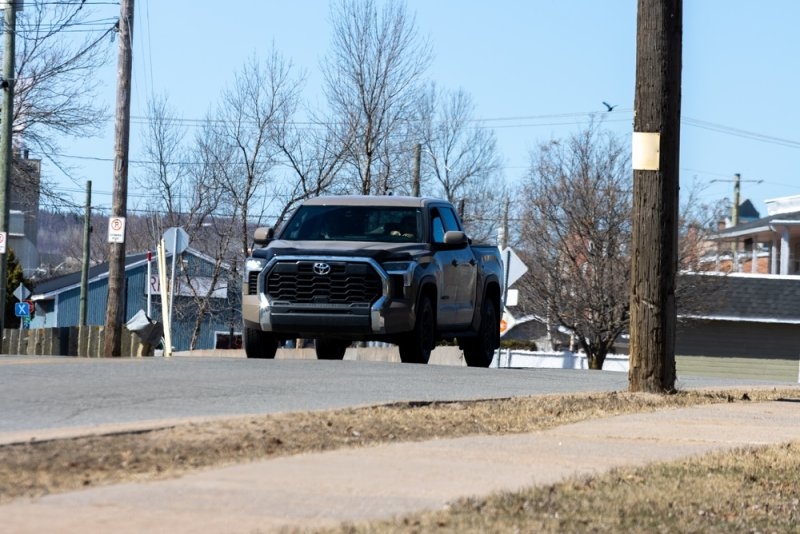
The 2026 Toyota Tundra definitely shines in a number of areas, though it may fall a little bit short in others compared to its competitive peers.
The 2026 Tundra is made for those people who need a full-size pickup truck to haul or tow some pretty significant loads. Additionally, it provides a generous interior space and a load of available technology, which might attract city drivers looking for their second vehicle.
That said, drivers looking for optimal fuel economy and who are fine with a smaller cab might be better suited to look at another section. The fuel economy, the size, and the hefty asking price that you can end up reaching for on the higher trims are all items to consider before buying.
The full-size truck segment is one of the most competitive fields in the automotive industry, and there are many great alternatives to the Toyota Tundra that could be perfect for any particular buyer. The other major competitors in the full-size truck segment are the Ford F-150, Chevrolet Silverado 1500, and the Ram 1500.
Amongst this lineup and that listed previously, the Tundra feels unique due to the hybrid power and updated engines, as well as an overall pleasing modern-day truck style. Despite this, there are multiple other options consumers are available to if good MPG, greater towing ability, or other specifications interest them.
In summation, the 2026 Toyota Tundra has a brilliant full-size truck option on the market; the combination of upgraded powertrains, updated technology, functional cabin space, and configuration options more than make it a viable contender compared to its peers. Even if it might not excel in fuel economy, the day-to-day comfort and utility more than make up for it.
The current-gen design continues for the 2026 Tundra, which will still feature standard turbocharged and hybrid powertrains, as well as modern technology, a range of configurations, and a suspension designed for a balance of capability and everyday driving comfort.
No, the current-gen Tundra ditched the outgoing models' V8 for a twin-turbocharged V6, which is also available as an i-FORCE MAX hybrid powertrain.
The cabin is very roomy, and ride quality has improved significantly over the outgoing models, though the suspension can feel stiff on very rough roads.
Key benefits are the muscular torque and power, a roomy cabin, good tech throughout the interior, and a broad selection of configurations and drivelines including optional 4WD and the i-FORCE MAX hybrid powertrain.
Top downsides are its rather unimpressive fuel-efficiency ratings, bumpy ride on harsh roads, premium price on better-equipped versions, and well-built, even more competitive peers.


