

Author: Shilpi Singh
Ask any longtime Toyota fan why the 4Runner has stuck around this long, and you'll usually get the same answer: it never stopped being tough, even as everything else about it changed. Toyota 4Runner history now stretches across six generations and more than forty years, and each one tells you something about what drivers wanted at the time. This guide walks through that whole run, starting with a fiberglass-topped truck in 1984 and ending with the turbocharged, hybrid-capable SUV sitting in showrooms right now.
Strip it back far enough, and Toyota 4Runner history starts with a fairly simple workaround. Toyota needed a passenger-friendly SUV, so it took a compact Hilux-based pickup and bolted a fiberglass shell onto the bed. It wasn't meant to be a grand design statement-it was a practical fix that happened to sell well. That success turned a one-off idea into a permanent model, and from there, the Toyota 4Runner model history became one of steady, generation-by-generation refinement rather than sudden reinvention.
Before getting into the details, here's the short version-every generation, its years, and what powered it.
| Generation | Years | Chassis Code | Notable Engine |
| First Generation | 1984-1989 | N60 | 2.4L I4, later 3.0L V6 |
| Second Generation | 1990-1995 | N120/N130 | 2.4L I4, 3.0L V6 |
| Third Generation | 1996-2002 | N180 | 2.7L I4, 3.4L V6 |
| Fourth Generation | 2003-2009 | N210 | 4.0L V6, 4.7L V8 |
| Fifth Generation | 2010-2024 | N280 | 4.0L V6 |
| Sixth Generation | 2025-Present | N500 | Turbo 2.4L I4, hybrid option |
This is where it all began. The Toyota 4Runner first generation was, honestly, just a dressed-up Hilux pickup-same chassis, with a removable fiberglass top bolted over the bed. Early units didn't even bother with rear seats, since skipping them let Toyota classify the vehicle as a light truck.
Under the hood sat a 2.4-liter four-cylinder, with a 3.0-liter V6 joining the lineup by 1988. The suspension paired a torsion bar front end with a leaf-sprung solid rear axle, built more for durability than comfort.
Don't expect air conditioning or power windows on an early example-they simply weren't there. This generation was built for people who cared more about clearing a trail than staying cool on the drive there.
By 1990, Toyota had ditched the removable top for good, moving to a fully enclosed steel body. The priorities shifted too-this generation leaned toward comfortable daily driving instead of just off-road grit.
Swapping the old leaf-spring rear end for coil springs made a real difference on pavement. Four-wheel-drive capability stuck around, but the ride quality finally caught up to expectations.
1990 brought the 4Runner's first anti-lock braking system, though only on the rear wheels. Engine choices carried over from before-the familiar 2.4-liter four-cylinder and 3.0-liter V6.
The third generation wasn't a light refresh-Toyota redesigned the tub, chassis, and powertrain lineup from the ground up. It's arguably where the 4Runner started feeling like a proper modern SUV.
For the first time, the front suspension went fully independent. Handling and everyday comfort improved noticeably, without giving up much of the off-road ability people expected.
Buyers picked between a 2.7-liter inline-four and a 3.4-liter V6, both a step up from before. Either option handled daily commuting fine while still holding its own on a rough trail.
Here's where Toyota 4Runner history takes a noticeably upscale turn. The fourth generation grew larger, added real interior space, and started chasing family buyers just as hard as off-road enthusiasts.
A 4.0-liter V6 became the standard engine, with a 4.7-liter V8 available for a while too. Higher trims even got rear-seat entertainment and navigation-features that would've seemed out of place a decade earlier.
Despite the added polish, the body-on-frame construction and solid rear axle never went away. Toyota clearly didn't want comfort upgrades to come at the cost of genuine capability.
Must Try: Cheapest Electric Car in 2026: Best Value EVs Compared Now
Fifteen years is a long run for any vehicle generation, and the fifth-generation 4Runner pulled it off. It's also the version most people picture when they hear ""4Runner"-the styling that stuck.
Toyota added the Kinetic Dynamic Suspension System, Multi-Terrain Select, and Crawl Control during this run. The TRD Pro trim gave off-road buyers a factory-built option without needing aftermarket work.
A 2013 refresh sharpened the exterior and reworked the interior. By 2020, Apple CarPlay, Android Auto, and standard Toyota Safety Sense finally rounded out the package.
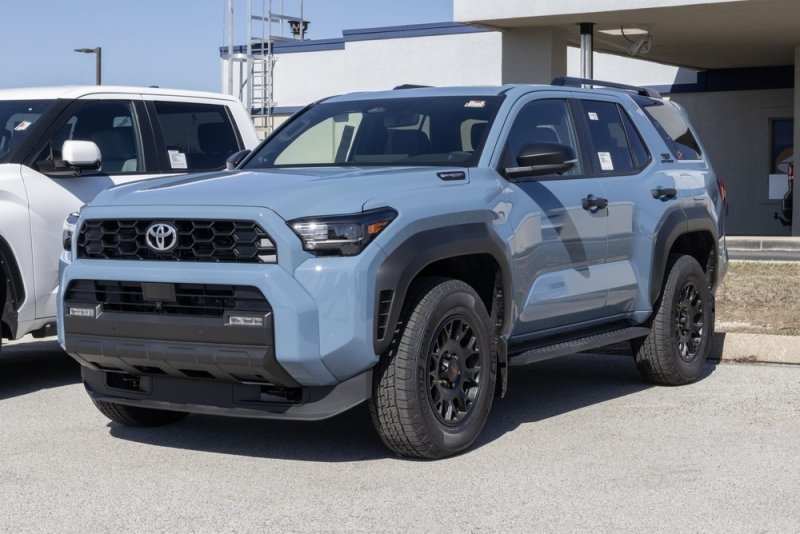
If earlier updates felt incremental, this one doesn't. The sixth generation now shares its TNGA-F platform with the Tacoma, Tundra, and Land Cruiser-a genuinely different foundation than before.
Out goes the old V6; in comes a turbocharged 2.4-liter four-cylinder making 278 horsepower. Select trims also offer a hybrid i-FORCE MAX setup, something no previous 4Runner has had.
The styling actually nods back toward the boxy original from 1984, just with modern lighting and proportions. Underneath, a high-strength ladder frame keeps the off-road toughness people expect fully intact.
Zoom out across the whole timeline, and the pattern is pretty clear: this was never about reinventing the 4Runner every few years. It was about improving it just enough each time-better engines, better tech, better comfort-without losing the body-on-frame toughness that earned it a following in the first place. That restraint is probably the real reason owners keep coming back generation after generation.
The short answer: 1984, built off a modified Hilux pickup platform with a fiberglass shell and extra seating bolted on. It wasn't glamorous, but it worked well enough to launch six generations and over forty years of production that's still going strong today.
Forty years in, the 4Runner still feels like the same idea Toyota started with-just sharpened over time. Each generation added comfort and tech without losing that body-on-frame toughness owners actually rely on. That balance is exactly why it's stuck around this long and probably why it'll keep going.
Also Read: Why Hybrid Cars Keep Winning Even in a Struggling EV Market
It's really a story of steady evolution-a rugged, pickup-based SUV slowly becoming more refined and tech-forward. Each generation added comfort and safety without giving up the off-road ability owners actually rely on.
Six, running from 1984 all the way to today's model. Every generation brought its own chassis code, engine lineup, and tech upgrades, tracking how driver expectations shifted across four-plus decades.
Mostly its removable fiberglass top and bare-bones, truck-based build. It leaned hard into rugged four-wheel-drive capability and skipped most comfort features, which suited outdoor and camping-focused buyers just fine.
The sixth generation needed better efficiency without losing power, and a turbocharged four-cylinder delivered that. It also opened the door to a hybrid option, something the nameplate had never offered before.
Often, yes-the fourth and fifth generations especially hit a good balance of reliability and modern comfort. Just check maintenance history closely, since high-mileage off-road use is common with these trucks.


