

Author: Shilpi Singh
Buying an EV used to mean paying a hefty premium over a comparable gas car. That's changing fast. Right now, the cheapest electric car on the market starts under $30,000, and it comes with real range to back it up. Still, the sticker price is only half the picture. Charging costs, incentives, and actual range all play into what you'll really pay over time. Here's a rundown of the least expensive electric car options for 2026, so you can find affordable electric cars that actually fit your budget.
These three currently hold the lowest starting prices you'll find anywhere in the US.
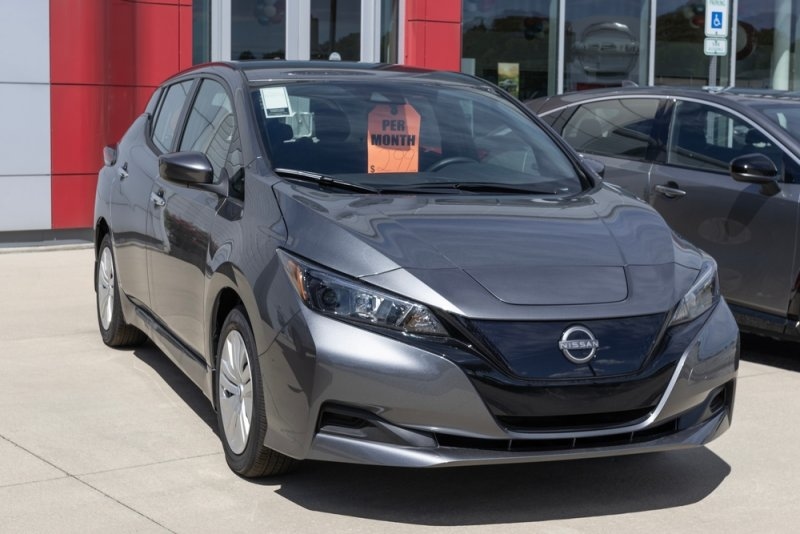
If you want the cheapest electric car available new, this is it. What's surprising is how much range you get for the price: 303 miles from a 75 kWh battery, which is genuinely competitive. It also comes with a built-in NACS fast-charging port and a J1772 inlet, so you're not locked into one charging network. Honestly, it's hard to beat as a starting point if budget is your main concern.
The Kona Electric edges out most small SUVs on price, though its 200-mile range won't win any awards. It's really built for city driving and short, predictable commutes rather than long hauls. You still get wireless Apple CarPlay, Android Auto, and a 12.3-inch digital cluster as standard. If your daily driving stays local and you can charge at home, that range limit barely matters.
The Equinox EV stretches to 319 miles of EPA-estimated range, the best number in this price bracket. It also gives you actual compact-SUV space, something the smaller hatchbacks on this list can't match. Chevy says fast charging can add about 77 miles in just 10 minutes. For anyone who wants SUV room without stepping into luxury pricing, this one's worth a close look.
These models cost a bit more but still sit well below most of the EV market.
Trim choice matters a lot with the bZ. The base XLE trim only manages 236 miles, but stepping up to the XLE Plus jumps you to 314 miles. That's a big enough gap that it's worth test-driving both before you decide. Don't assume the entry-level bZ tells you the full story here.
Let's be clear: the 500e isn't built for road trips. Its 149-mile range is the shortest on this list, but it's genuinely fun to drive around town. If you live in a city and rarely leave it, this least expensive electric car alternative brings style that the others don't really try for.
Recent price cuts turned the Ioniq 5 into one of the better value plays of 2026. Range depends on trim, topping out around 303 miles on the best-equipped version. Fast-charging speed and interior space hold up well against pricier SUVs, so it's worth confirming your exact trim's EPA number before signing anything.
These four sit closer to $40,000, but they make up for it with noticeably longer range.
Nothing else on this list touches the Model 3's 321 miles of range under $40,000. Add in charging speeds up to 225 kW, and you can top up a meaningful amount of range in about 15 minutes. Tesla's Supercharger network still makes road trips easier than with most other affordable electric cars here.
The base Mach-E Select gets you 260 miles of range and genuine crossover practicality. It brings Ford's driving character into the low-cost electric vehicles conversation in a way few rivals do. Budget allowing, higher trims unlock more performance and range down the road.
The EX30's Single Motor Extended Range trim delivers 261 miles, plus a five-star Euro NCAP safety rating. Pricing landed higher than Volvo's early teasers promised, which disappointed some early shoppers. Even so, its compact size and genuinely modern design keep it a reasonable pick.
The ID.4 Pro tops out this list at $45,095, with 291 miles of range and included charging plan perks for new owners. That's a real jump from the cheaper options above, so it's less of a budget pick. Still, if you like VW's driving feel, it's worth cross-shopping.
Must Try: Is EV Charging at Home Worth It for Every Driver in 2026?
Here's the thing: the federal New Clean Vehicle Credit ended for anything purchased after September 30, 2025. That knocked up to $7,500 off the table for a lot of shoppers. Even so, affordable electric cars can still cost less to run than gas cars over the years you own one. Electricity is generally cheaper per mile than gasoline, especially if you're charging at home overnight. Some states and cities still run their own rebate programs, so it's worth checking what's available where you live.
Charging costs really come down to where and when you plug in. Say you drive 1,000 miles a month at roughly 3.0 miles per kWh; that works out to around 333 kWh. At $0.15 per kWh, you're looking at close to $50 a month. Public fast chargers almost always cost more per mile, so home charging is where the real savings live.
The price gap between gas cars and EVs keeps closing, year after year. Whether the lowest sticker price matters most to you, or you'd rather stretch your budget for extra range, there's a solid option in nearly every price tier now. The Leaf wins on price, the Equinox EV wins on space, and the Model 3 wins on range. Check what's actually in stock nearby, and pick the cheapest electric car that fits how you really drive, not just how the spec sheet reads.
Also Read: How Does the Electric Car Tax Credit Work in 2026?
Right now, that title belongs to the Nissan Leaf S+, starting at $29,990. What really stands out is the 303-mile range, which is impressive for the price. It also supports NACS fast charging, so you're not stuck with limited charging options either.
Nope, that one's gone. The federal New Clean Vehicle Credit ended for anything bought after September 30, 2025. That said, don't give up just yet; some states and cities still have their own rebate programs worth looking into locally.
That would be the Tesla Model 3 Standard, which manages 321 miles and still stays under $40,000. The Chevrolet Equinox EV isn't far behind at 319 miles. Either one works well if range matters more to you than shaving off a few extra dollars.
Honestly, it depends less on the badge and more on things like battery thermal management, how mature the software is, and whether service is easy to get. A good rule of thumb: check the battery warranty, usually eight years or 100,000 miles, before you commit to anything.
Generally, yes, used EVs can save you a good chunk of money compared to even the cheapest new models like the Leaf. Just keep in mind the battery's already aged some, so range takes a hit. They're a better fit if most of your driving stays local anyway.


