

Author: Shilpi Singh
Most 4Runner owners brag about mileage. Few brag about checking recalls. Funny, because a bad airbag inflator doesn't care how many trails you've done.
So let's fix that. Below you'll find the numbers by year, the defects that actually matter, and a quick way to check your own truck. No jargon, no scare tactics, just what you need to know. Grab your VIN and keep reading.
Think of the Toyota 4Runner recall list as a public file kept by NHTSA. Every official safety campaign gets an entry with the defect, the danger, and the free fix. Cars.com shows 40 results, some from 2002. MECH AI counts 34 campaigns for 2010 to 2025. Most are boring paperwork. A few aren't, and those are the ones worth knowing about.
Nearly all of them. Older trucks lead the pile, and that makes sense: more years on the road means more time to find problems. Here's the Toyota 4Runner recall by year picture, with owner complaints beside it.
| Model Year | Recalls | Owner Complaints |
| 2010 | 12 | 146 |
| 2011 | 10 | 163 |
| 2015 | 9 | 86 |
| 2012 and 2016 | 8 each | 96 and 80 |
| 2018 | 5 | 59 |
| 2020 to 2025 | 1 to 3 each | 9 to 62 |
Heads up on the math. One campaign often covers several years, so the yearly numbers add up to 82. NHTSA only lists 34 separate campaigns.
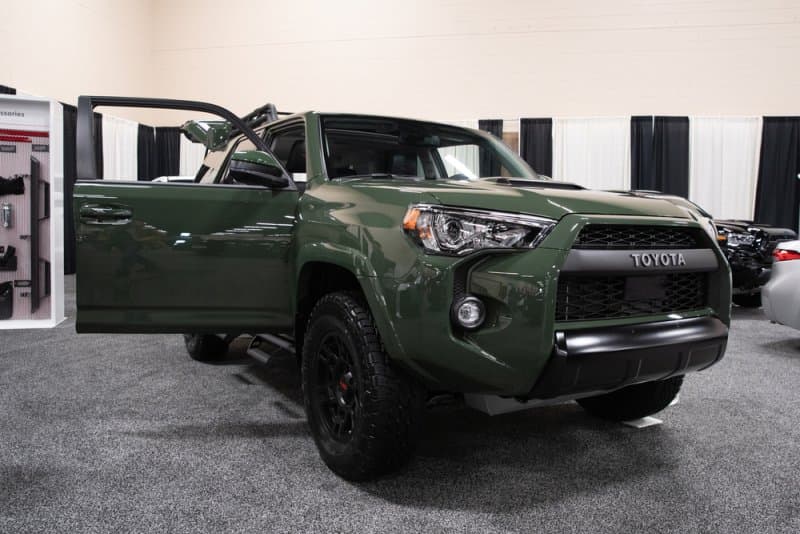
Four themes keep showing up in Toyota 4Runner safety recalls. Two are serious, two are mostly annoying. I'll take them in order of how much they should worry you, which means the airbags go first. Knowing which is which saves you time.
Between 2016 and 2019, several campaigns reached 2010 to 2016 models. One 2016 recall covered passenger inflators that may have been built without ignition booster tablets. That's the kind of flaw you only discover in a crash. Dealers swap the part for nothing.
In November 2020, Toyota recalled 2018 and 2019 models because the low-pressure fuel pump inside the tank could quit. Picture the engine dying on a highway ramp. Not fun, and not safe. The dealer replaces the pump without charging you.
These pop up everywhere, even on the 2026 4Runner and its i-Force Max hybrid. The load capacity label shows the wrong weight, so you could overload the truck without knowing. Toyota or a distributor sends a corrected label. It's a small fix for a sneaky risk.
A September 2025 recall covers a startup glitch. Speed, brake, and tire pressure warnings may not light up. Sounds harmless until you need one of them. For most vehicles, the dealer updates the software over the air, so you won't wait long.
The Toyota 4Runner recall history on Cars.com starts in 2002. Airbags and dealer-installed accessories caused most of the headaches in the 2010s. Lately it's labels and software. The 2026 model already has two label recalls, one in May and one in September. Quieter, but they keep coming. If you're curious how the truck itself changed along the way, this timeline helps.
Must Read: What Is Toyota 4Runner History Across 6 Generations?
Recalls only tell half the story. Owners have filed 1,056 NHTSA complaints for 2010 to 2025 models, and a few systems dominate:
Take these with some salt. A complaint is just an owner's report, and popular years pile up more of them. Still, airbags sitting at the top match the inflator recalls above. Use the list to know where to look, not to panic.
Your VIN is a 17-character code, and it's the only thing that really answers the question. You'll find it on the dashboard by the windshield, or on the sticker inside the driver's door. Stick to official tools, because random lookup sites sometimes miss newer campaigns.
No results? Great. Check again in a few months anyway, since new campaigns land all the time.
Yes, always. Dealers do safety recall work at no charge, and the notices on Cars.com say so for labels, wiring, and software alike. Book ahead and bring your VIN. If someone quotes you a fee, call Toyota at 1-800-331-4331 before you agree to anything.
The RAV4 shares one of these recalls too, if you want a look at a sibling.
Must Read: How Has the 2026 Toyota RAV4 Interior Evolved for Comfort?
Toyota 4Runner recalls sound scary, but the fixes are free and usually fast. Take ten minutes today. Type in your VIN, see what comes back, and book the repair if something shows up. Your SUV has earned some attention, and so has everyone riding in it. A quick check now beats a long, expensive story later.
NHTSA lists 34 campaigns for 2010 to 2025 models, while Cars.com shows 40 results once early cases get counted. Numbers keep moving as new campaigns arrive, so confirm your own VIN yourself.
The 2010 model year wins, sadly, with 12 recalls. The 2011 model has 10, and 2015 sits third with nine. Campaigns that cover several years get counted once for every year they touch.
It depends on the defect. Fuel pump and airbag issues deserve a quick call to the dealer, while label errors can wait. Read your notice first, then ask the service desk how urgent yours is.
Yes, two so far. A May 2026 recall corrected a wrong load capacity label on certain trucks, and a September 2026 campaign covers inaccurate label weight values. Both repairs cost owners nothing.
Airbags, by a mile. They account for 353 of the 1,056 NHTSA complaints filed for 2010 to 2025 models. Electrical problems follow with 108, then service brakes at 101 and steering at 88.


